
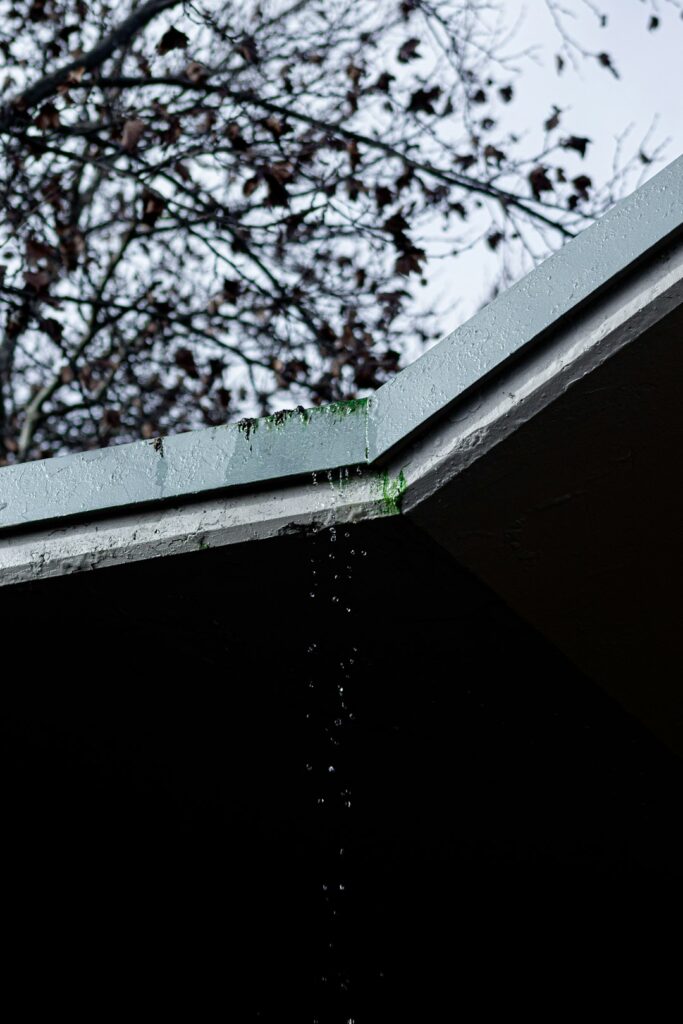
Rain gutters are part of a roof drainage system, not merely an accessory attached to the roof edge. Their main job is to collect water from the roof and direct it away from walls, windows, doors, foundations, landscaping, and walkways. When gutters are missing, blocked, damaged, or poorly sloped, roof-related problems can develop gradually and may not be visible until water has already caused damage.
For homes in Weedsport, NY, gutters must handle changing seasonal conditions, including heavy rain, falling leaves, freezing temperatures, snow, and repeated freeze-thaw cycles. Understanding how the system works can help residents recognize problems early and protect the roof structure.
How do gutters help protect a roof?
Gutters protect a roof by controlling where rainwater goes after it leaves the shingles. Without a functioning gutter system, water can run over the roof edge in sheets, soaking the fascia board and entering areas beneath the roofing material.
A properly working system helps:
- Reduce moisture exposure along the roof edge
- Protect fascia and soffit materials from rot
- Limit water entry near roof corners and eaves
- Move runoff away from exterior walls and the foundation
- Prevent concentrated streams from eroding soil below the roofline
- Reduce the chance of ice forming in poorly drained areas
Gutters do not make shingles waterproof, and they cannot correct every drainage problem. However, they reduce the amount of uncontrolled water that reaches vulnerable parts of the house.
What happens when gutters are clogged?
A clogged gutter can cause water to back up under the roof edge. Leaves, twigs, seed pods, and roof granules may collect inside the channel, especially during autumn. Once the blockage becomes substantial, rainwater may spill over the front of the gutter or pool near the roof edge.
This overflow can affect the roof in several ways. Water may soak the fascia, damage the ends of rafters, or reach the underside of the roof deck. In cold weather, trapped water can freeze and expand. Repeated freezing and thawing may loosen joints, pull gutters away from the house, and contribute to ice buildup along the eaves.
A gutter can appear mostly clear while still draining poorly. Small blockages near the outlet or downspout connection may allow water to drain slowly enough that overflow occurs during a heavy storm.
Can gutters cause roof leaks?
Gutters do not usually create a roof leak by themselves, but poor drainage can contribute to conditions that lead to leakage. Water that remains against the roof edge for extended periods may reach deteriorated wood, failed sealant, loose flashing, or vulnerable joints.
Several gutter-related conditions deserve attention:
- Gutters pulling away from the fascia
- Water collecting behind the gutter
- Downspouts that discharge directly against the house
- Overflow at roof valleys or inside corners
- Gutter sections installed too high or too low
- Fasteners that have loosened or pulled out
- End caps or seams that leak against the wall
Roof valleys can produce especially large amounts of runoff. If a gutter below a valley is undersized, blocked, or poorly positioned, water may repeatedly spill onto the siding and roof edge during storms.
Why are downspouts just as important as gutters?
A gutter channel can collect water correctly, but the system still fails if downspouts cannot move that water away. Downspouts carry runoff from the roof-level gutter to a safe discharge point near ground level.
Downspouts should not release large amounts of water directly beside the foundation. Concentrated discharge can saturate soil, create erosion, stain siding, and increase the chance of moisture entering a basement or crawlspace.
A downspout problem may be present when:
- Water pools at the base after rain
- The lower section is crushed or disconnected
- Water pours from a seam
- The outlet is blocked by debris
- The discharge area remains muddy
- The downspout is too short to move water away from the wall
Extensions, splash blocks, or other drainage methods may help, but the correct approach depends on the slope of the ground, the foundation design, and the amount of roof area draining into that downspout.
How often should gutters be checked?
Gutters should be checked at least twice each year and after major storms. A common schedule is late spring, after spring debris has fallen, and late autumn, after most leaves have dropped. Homes beneath mature trees may require more frequent inspections.
A basic inspection should look for:
- Standing water in the gutter
- Loose or missing fasteners
- Sagging sections
- Cracked seams or end caps
- Rust or holes in metal gutters
- Peeling paint or stained fascia
- Water marks beneath the eaves
- Downspouts that are blocked or disconnected
- Granules collecting in unusual amounts

The inside of the gutter is only part of the inspection. Water stains on soffits, fascia, siding, or foundation walls can reveal drainage problems that are not obvious from above.
Are gutter guards a complete solution?
Gutter guards can reduce the amount of leaves and larger debris entering a gutter, but they do not eliminate maintenance. Fine particles, roof granules, seeds, and small organic material may still collect on or beneath the guard. Some guard designs also require proper installation to prevent water from flowing over the front edge during heavy rain.
A covered gutter should still be inspected periodically. The roof edge, fasteners, seams, outlets, and downspouts need attention even if the channel itself appears protected.
Gutter guards can also complicate winter performance. Snow and ice may accumulate along the roof edge, and melting water can freeze on or around the guard. Their usefulness depends on roof design, nearby trees, debris levels, and installation quality rather than on the product alone.
How do winter conditions affect gutters and roof drainage?
Winter creates a different set of drainage concerns. Snow on the roof may melt unevenly, particularly when indoor heat escapes through poorly insulated or ventilated areas. Meltwater can refreeze near the colder roof edge, forming ice buildup.
Gutters can become heavy when filled with ice. That weight may bend the channel or pull fasteners from the fascia. Ice can also block downspouts, leaving nowhere for melting snow to drain.
Residents should avoid striking gutters or roof ice with tools, since impact can damage shingles, flashing, gutters, and the roof edge. Large or hazardous ice formations may require specialized handling, particularly above entrances, walkways, or areas regularly used by people.
Can gutter problems be mistaken for roof problems?
Yes. Water stains on ceilings, walls, or exterior trim may result from roof damage, gutter overflow, flashing defects, chimney or vent problems, or condensation. The location of the stain does not always identify the point where water entered because moisture can travel along rafters, roof decking, insulation, and wall cavities.
A useful observation is to compare the timing and location of the problem:
- Overflow during rain may indicate a gutter or downspout issue.
- A leak only during wind-driven rain may involve flashing or exposed roof areas.
- Staining near the roof edge may relate to overflowing gutters or damaged fascia.
- Dampness during cold weather without rain may point toward condensation or ice-related conditions.
Because roof drainage and roof covering work together, diagnosing the source often requires examining both systems rather than replacing shingles based only on an interior stain.
What should residents watch for after a storm?
After heavy rain, walk around the home only from a safe location and look for visible signs of drainage trouble. Avoid climbing onto a wet roof or unstable ladder.
Useful observations include water pouring over gutter edges, detached downspouts, new stains on siding, soil washed away below roof corners, and water collecting near doors or the foundation. From inside the attic, damp insulation, darkened wood, or daylight visible around roof edges can also signal a problem, although attic access should be approached carefully.
Roof health depends on more than shingle condition. A sound roof also needs clear drainage paths, secure gutters, functioning downspouts, intact fascia, and enough separation between runoff and the building structure. Regular observation is especially useful in a community exposed to leafy autumn conditions, winter ice, and strong seasonal rainfall.
